ServicesAlkaline Water Systems
Alkaline Water Systems in La Porte
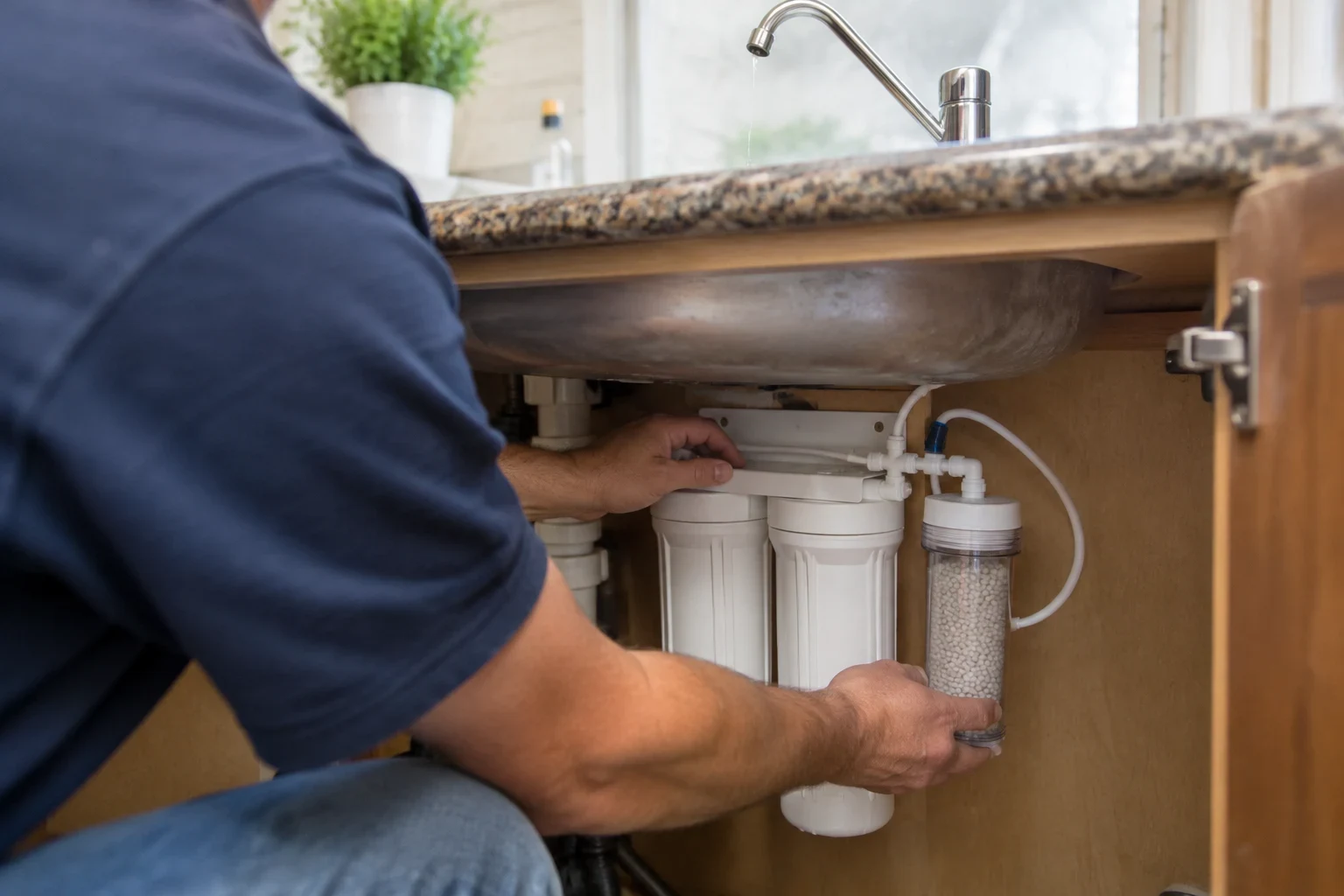
We install alkaline water systems that filter your drinking water first, then run it through calcium and magnesium media at the last stage. You get mineral-balanced water at a dedicated kitchen faucet, and a written quote that lists every part before we start.
What an Alkaline System Actually Does
Most of the alkaline systems we install sit under the kitchen sink. Water passes through sediment and carbon stages to take out particles, chlorine taste and odor, then through a remineralization cartridge packed with calcite and magnesium media. As water flows over that media it picks up a small amount of dissolved mineral, which nudges the pH up and gives the water a rounder taste.
This pairs especially well with reverse osmosis. An RO membrane strips out nearly everything dissolved in the water, which is why RO water often tests slightly acidic and can taste flat. A mineral stage after the membrane puts some of that back. When an RO unit is already working under your sink, the mineral cartridge can usually be plumbed in after its storage tank, so the existing system stays in place.
We sell alkaline water for taste and for people who like a mineral profile in their drinking water. We do not make medical claims about it, and we will tell you plainly when another option fits your home better.
What the Installation Includes
A tap check before pricing
We read the pH and total dissolved solids (TDS) at your kitchen tap. Those two numbers tell us how much mineral the water carries now and which cartridge setup makes sense.
Filtration ahead of the mineral stage
Remineralization only works well on clean water. Each system starts with sediment and carbon stages, or an RO membrane, so chlorine and grit never reach the mineral media.
Remineralization cartridge
Calcite raises pH and adds calcium. Magnesium media adds a second mineral and pushes pH a little higher. We match the blend to your starting water so the result is pleasant, not chalky.
Its own drinking spout
The treated line ends at a separate spout on the countertop or sink deck, and an unused sprayer hole often saves drilling. Supply comes from a new tee installed at the cold-water angle stop, never a clamp-on saddle valve that can weep over time.
Leak check and walkthrough
We pressurize the system, flush the cartridges, watch every fitting under load and show you the shutoff. Free installation is part of the job, and it is listed on your paperwork.
Signs an Alkaline System Fits Your Kitchen
Your RO water tastes flat
Very low TDS water can taste empty or slightly sour. A mineral stage after the membrane usually fixes that within the first glass.
A pH strip reads below neutral
RO water commonly lands in the low 6s because it absorbs carbon dioxide once minerals are gone. Calcite media buffers that back up.
You buy alkaline water by the case
Hauling bottles home costs money and fills the recycling bin. A cartridge at the sink makes the same kind of water on demand.
Coffee and tea taste off
Brewing needs some mineral content to pull flavor from the grounds or leaves. Mineral-free water often makes coffee taste thin.
How the Job Runs
- 1
Phone conversation
You tell us what you drink, whether you already have a filter or RO unit, and what bothers you about your water now. We ask about the sink layout and cabinet space.
- 2
Tap readings and cabinet look
At your home we test pH and TDS, check the angle stop and drain, and measure the space under the sink. That determines the parts list.
- 3
Written quote
You get the system, cartridges, faucet, fittings and any extra parts in writing, along with the replacement schedule and what each cartridge costs. Nothing gets added on the day without your approval.
- 4
Install and flush
Most under-sink installs take part of one visit. We lay a towel in the cabinet, install, flush the new media until the water runs clear, then retest pH so you see the change.
- 5
Ongoing care
Full services after the sale come with every system. That covers cartridge changes and a fresh pH and TDS reading whenever the taste starts to shift. Mineral media dissolves gradually, so the numbers show us when a swap is due rather than a guess on the calendar.
What Moves the Price
Your price depends mostly on what you already have under the sink and how much filtration has to happen before the mineral stage. We put each line in the written quote so you can compare options side by side. Ongoing cartridge cost is listed too, because that is part of what the system costs you.
- Add-on or full system
- Adding a mineral cartridge to a working RO unit is the smallest job. A new RO system with a built-in alkaline stage involves more parts and labor.
- Your starting water
- Higher chlorine or sediment means stronger prefiltration. Very low TDS water may call for a magnesium blend rather than calcite alone.
- Faucet and countertop
- Using an existing sprayer or soap dispenser hole is simple. Drilling quartz or granite takes more time and a diamond bit.
- Plumbing condition
- A seized or leaking angle stop needs replacing before we tee off it. We show you the valve and list the replacement as its own line.
Alkaline Water Questions
Something not covered here? (281) 717-6987
Does alkaline water do anything for my health?
The research on that is not settled, so we leave health promises out of the conversation entirely. What the system does deliver is filtered water carrying added calcium and magnesium, with a taste many people like better. For medical questions, your doctor is the right person to ask.
What pH will my water be?
Most remineralization setups bring water into the slightly alkaline range, roughly the high 7s to around 9, depending on your starting water and the media blend. The pH drifts down as the media is used up. We retest at install so you know your baseline.
Can you add this to the RO system I already have?
Usually, yes. If the housings and membrane are in good shape, we add an inline mineral cartridge after the storage tank. If the unit is worn out, we will tell you and put both choices in writing with their prices.
How often does the cartridge need changing?
Mineral cartridges are typically replaced every six to twelve months, depending on how much water you draw. A falling pH reading or a return of the flat taste is the cue. The expected interval is written down for you before the install.
Will it feed my refrigerator and ice maker?
It can, using a tee off the drinking line. Some people prefer to keep the fridge on plain filtered water because mineral water can leave light spotting on ice trays. We will set it up whichever way you choose.
See Your Parts List Before Anything Is Installed
Tell us what is under your sink now and how your water tastes. We will come read your tap, then put the full system and cartridge costs in writing.