ServicesWhole-Home Filtration
Whole-Home Filtration in La Porte, TX
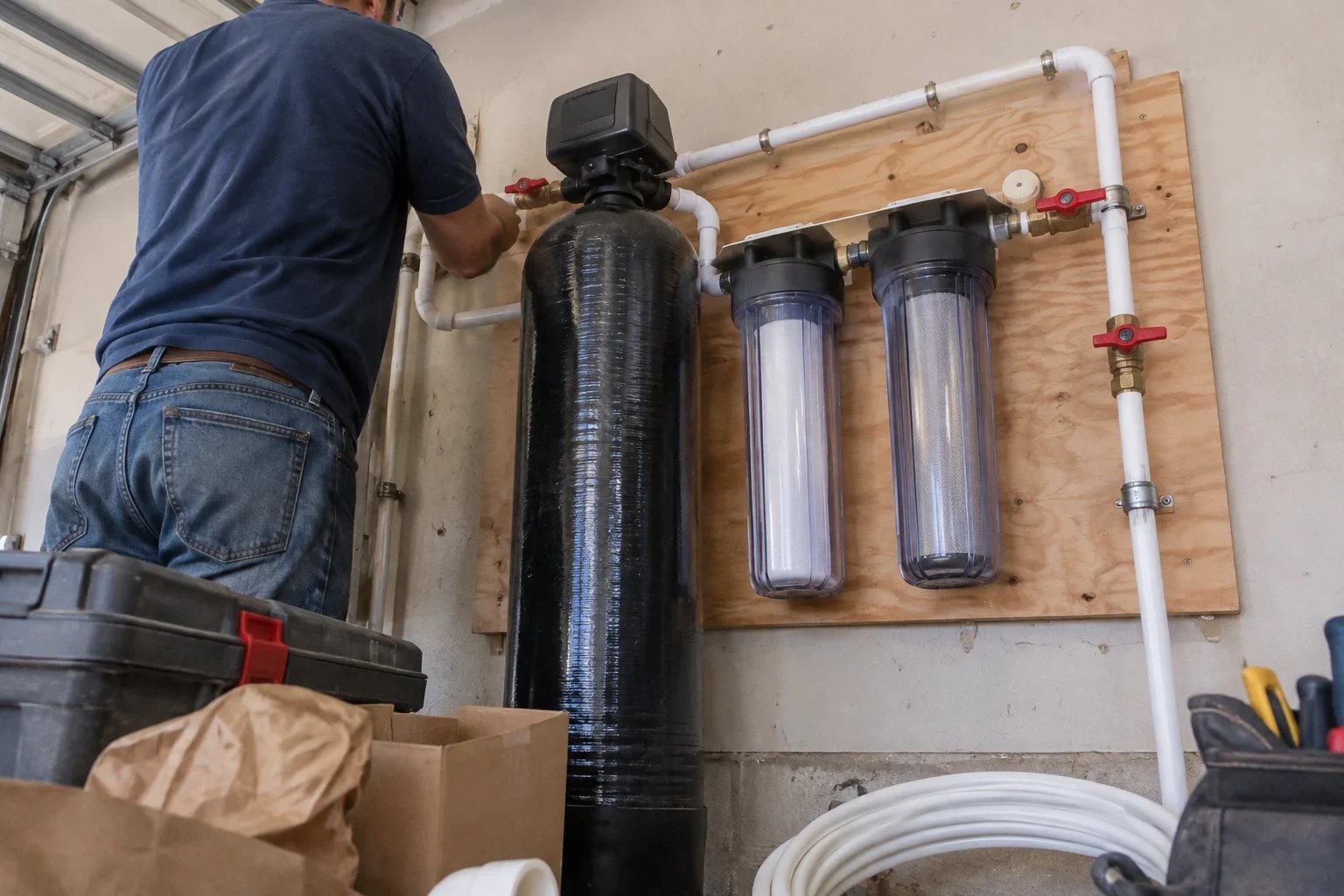
We install point-of-entry carbon filtration on your main water line, so every faucet, shower and appliance gets water with less chlorine taste, odor and sediment. Before any work starts, you get a written quote listing the tank, media, valve and plumbing changes.
Where the system sits and which problems it fixes
A whole-home system is plumbed in at the point where the main line enters your home, upstream of the water heater. Water moves through a sediment prefilter first, then through a tank of catalytic carbon that adsorbs chlorine and chloramine. Utilities add those disinfectants to protect water as it travels through miles of city pipe. By the time it reaches your house, that work is done, so the carbon pulls them out and your shower, ice maker and kitchen tap stop tasting and smelling like a pool.
This is the right fix when the problem shows up all over the house: a bleach smell in hot showers, an off taste in every glass, grit in every aerator. It does not soften water, and it is not built to polish drinking water. If white spots and scale are the issue, see Water Softeners. If you want lead or trace contaminants reduced at the kitchen sink, Reverse Osmosis is the better tool, and plenty of homes pair the two.
We explain the scope and every pricing factor in writing before we touch a pipe, so there are no add-ons once the job is underway.
What the installation includes
- Sediment prefilter
- A pleated or spun cartridge catches sand, pipe scale and rust flakes before they reach the carbon. Without it, fines pack the carbon bed and pressure drops long before the media is used up.
- Catalytic carbon tank
- We size the tank to your home's peak flow rate, not just the number of bathrooms. Catalytic carbon breaks down chloramine far better than standard granular carbon, which matters because many utilities now use chloramine instead of free chlorine.
- Bypass valve and shutoffs
- A three-valve bypass lets you isolate the system and keep water running to the house during a cartridge change or service visit.
- Pressure gauges
- Gauges before and after the system show the pressure drop across it. When the gap widens, the prefilter is loaded, and you can see it without guessing.
- Plumbing tie-in and cleanup
- We match your existing PEX, copper or CPVC, add a ground jumper wherever we cut into metal pipe that may carry the electrical ground, flush the new media to drain and clear the work area before we leave.
- Free installation and follow-up
- Free installation is part of our offer, and so are full services after the sale: cartridge changes, media replacement and a check whenever something seems off.
Signs your home needs whole-house filtration
Pool smell in the shower
Heated water releases chlorine into the steam, and with the bathroom door shut that odor has nowhere to go. A filter under the kitchen sink never touches the water feeding your shower.
Ice and coffee taste off
The refrigerator line and coffee maker draw unfiltered water. Chlorine taste concentrates in ice and comes through clearly in coffee and tea.
Grit in aerators and toilet tanks
Sand or dark flakes in faucet screens and the bottom of toilet tanks point to sediment moving through the line, often after utility main work or a pressure surge.
Flappers and seals failing early
Chloramine is hard on rubber. Toilet flappers, fill valve seals and faucet washers that swell, soften or leak sooner than they should can be a sign of long-term exposure.
Dry skin after showering
Some people notice tight skin or brittle hair that improves when they shower somewhere else. Reducing chlorine at the main line is a reasonable first step.
What sets the price
Every whole-home quote is written line by line with these factors spelled out. If we find something on site that changes the scope, such as corroded pipe at the tie-in point, we stop and explain it before going further. You approve the change in writing, or the job stays exactly as originally written.
Tank size and flow rate
A larger home with several baths running at once needs a bigger media bed to keep contact time up and pressure loss down. An undersized tank lets chlorine pass through at peak flow.
Media type
Catalytic carbon costs more than standard granular carbon but holds up against chloramine. Adding a layer such as KDF for extra chlorine reduction also changes the price.
Control valve
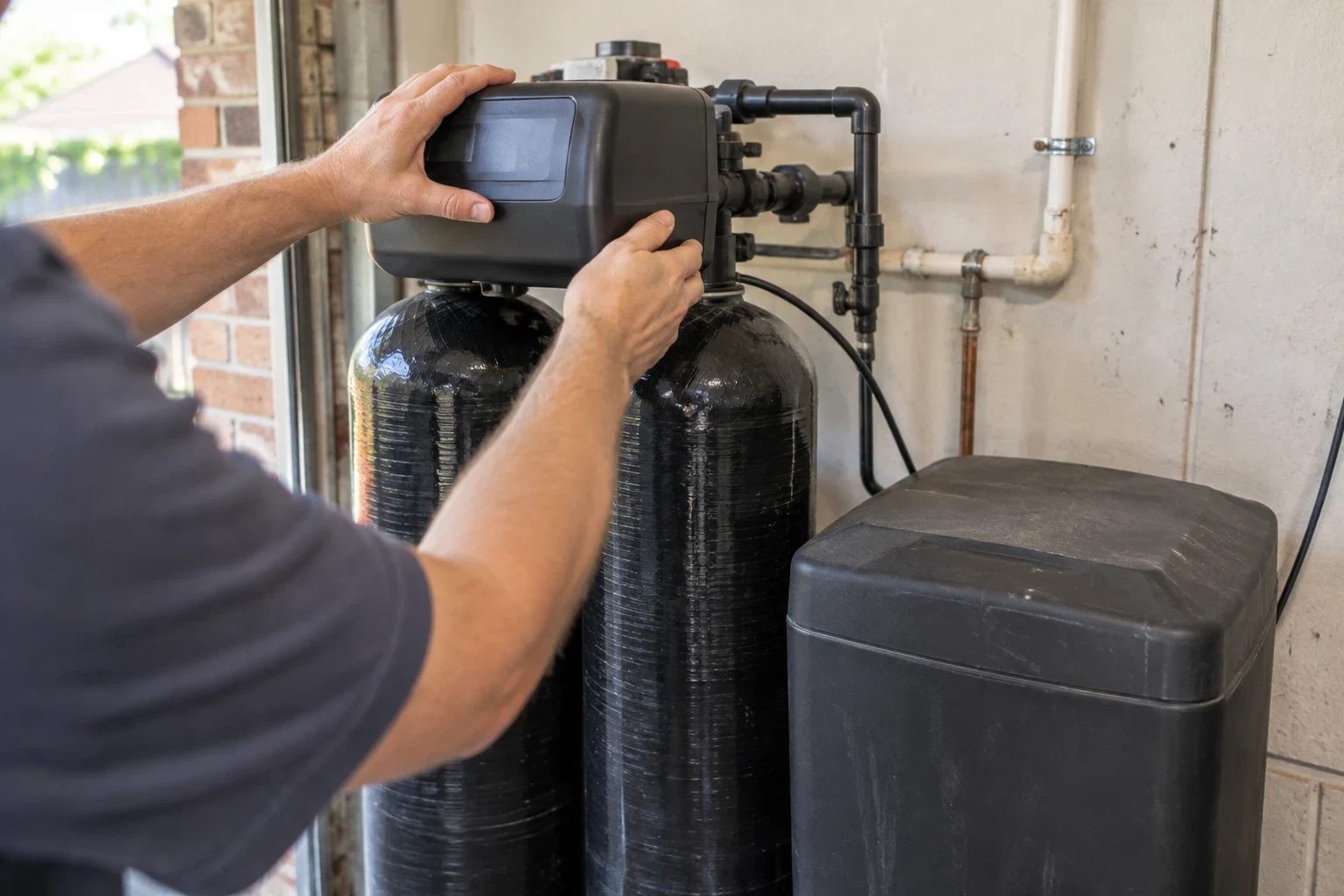
An upflow tank with no backwash is simpler and uses no extra water. A backwashing head keeps the bed loose for longer media life but needs a drain line and sometimes power.
Location and plumbing
Distance from the main entry point, the pipe material and whether the system sits outdoors or in a garage all affect parts and labor.
Ongoing maintenance
Sediment cartridges are a recurring cost, and the carbon bed is replaced on a longer cycle. We list both so you know the cost of ownership, not just the install.
How install day runs
- 1
Water check and written quote
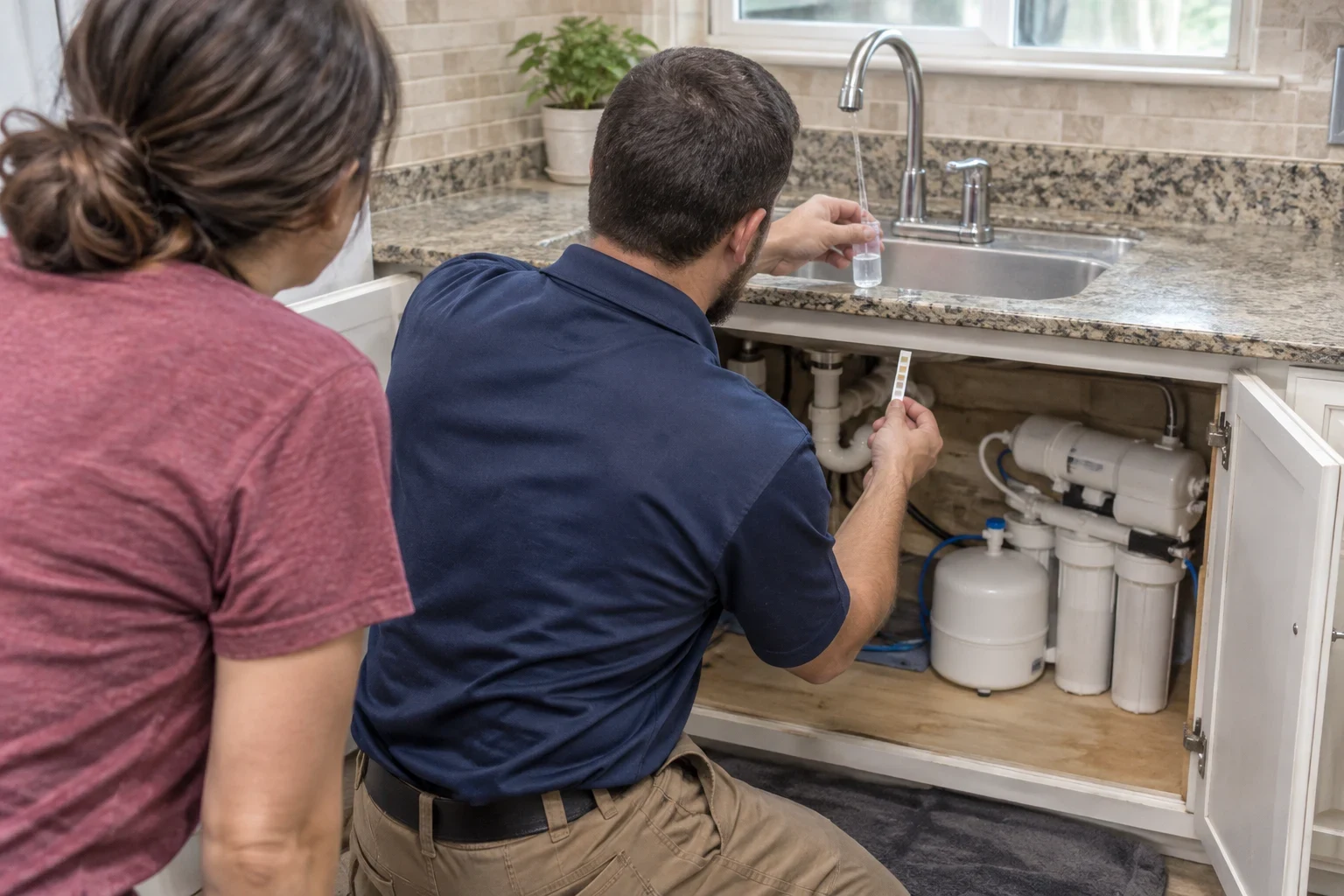
We test total chlorine, measure static pressure and check flow at an outside spigot. The written quote names the tank size, media, valve, fittings and any plumbing changes, along with what each one costs.
- 2
Choosing the location
The system goes near where the main enters, usually a garage wall or an exterior wall. It needs a level base, a drain if the valve backwashes and an outlet if the control head is electronic. Outdoor installs get a cover so Gulf Coast sun doesn't degrade the tank and fittings.
- 3
Cutting in the system
We shut off the main, install the bypass, mount the prefilter and tank, and make the connections. Most installs take a few hours, with the water off for only part of that time.
- 4
Flush, test and walkthrough
We flush carbon fines to drain until the water runs clear, then test chlorine at a tap so you can see the reduction. Before we leave, we show you the gauges, the bypass and how to shut the system off.
Whole-home filtration questions
Will a whole-house filter lower my water pressure?
A correctly sized system causes only a small drop that most people never notice. Noticeable pressure loss usually means a clogged sediment cartridge or a tank too small for the flow. The gauges we install show you which one it is.
How long does the carbon bed last?
Bed life tracks two numbers: the total gallons that pass through it and the disinfectant level in the supply. A catalytic carbon bed sized to the house commonly lasts several years. Sediment cartridges are the short-cycle item and get swapped every few months. We build your schedule around the water your household actually draws.
Will it remove lead?
Most whole-home carbon media is not rated for lead, and lead usually comes from solder, older faucets or fittings inside the house, after the point where a whole-home system sits. For drinking water, a reverse osmosis unit at the kitchen sink is the right tool. Water Testing tells you whether lead is present at all.
Should I add a water softener alongside it?
Carbon leaves calcium and magnesium in the water, so it won't stop white spots or scale on fixtures. Hardness varies from one home to the next, so we measure yours before suggesting anything. If the reading comes back low, we'll tell you a softener isn't worth the money.
Does the system waste water?
Upflow models with no backwash use no extra water. Backwashing models send a set amount to drain each cycle, and we note that in writing so you can compare the two before choosing.
Get your whole-home system scoped in writing
Tell us where your main line comes in and what you're noticing at the tap. We'll talk through the options on the phone and put the full scope in writing before any work begins.