ServicesWater Softeners
Water Softeners in La Porte
A softener swaps calcium and magnesium for sodium or potassium inside a resin bed, which stops scale before it reaches your pipes, water heater and fixtures. We test your hardness first, size the unit to your home and put the full scope in writing before we install.
What a softener does, and when it is worth it
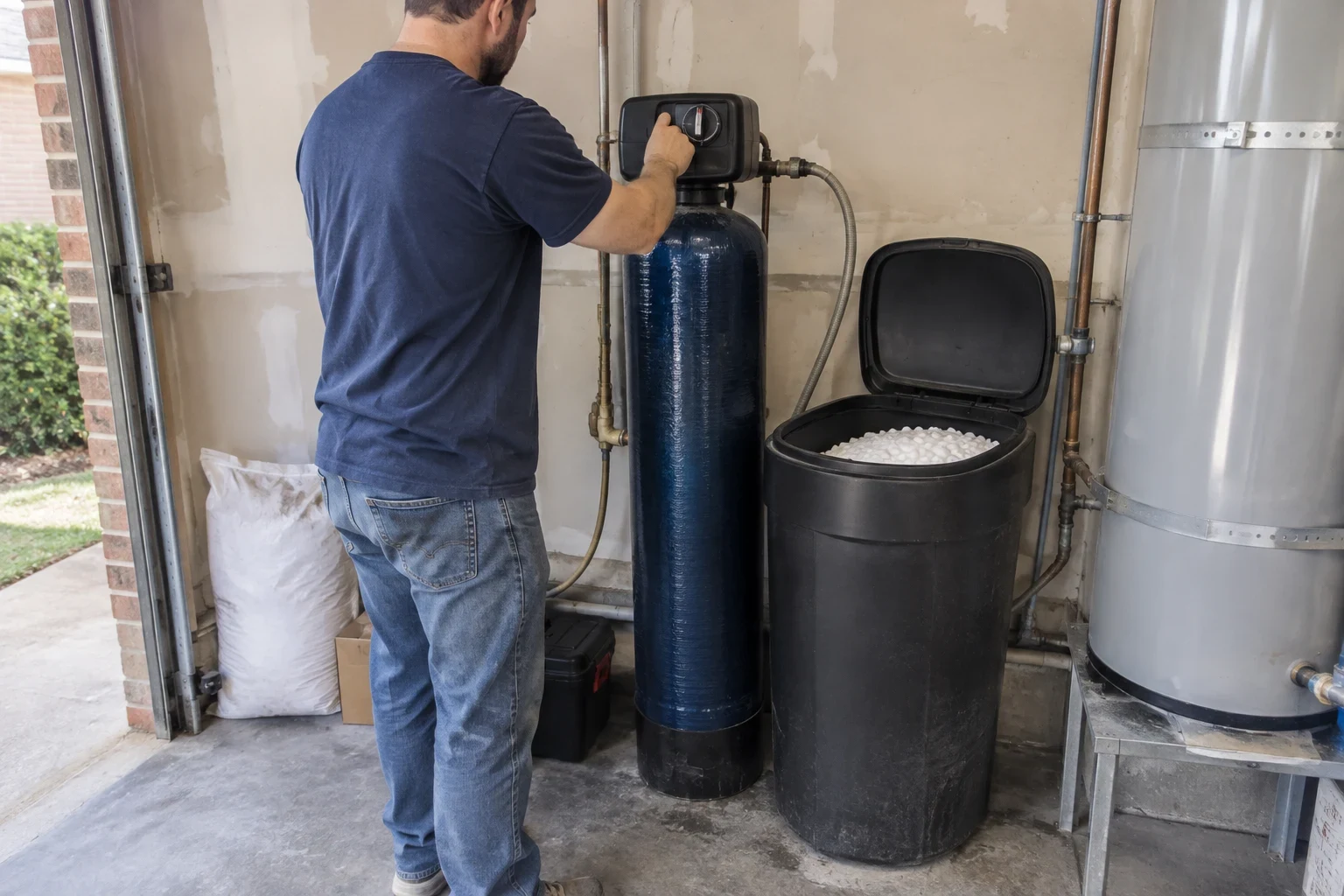
Hard water carries dissolved calcium and magnesium. When it is heated or evaporates, those minerals drop out as scale: white crust on faucet aerators, a layer on the bottom of the water heater tank, film on shower glass. A water softener removes them through cation exchange. The mineral tank holds a bed of small resin beads loaded with sodium ions. As your water flows through, the beads hold on to calcium and magnesium and release sodium in their place. Once the bed fills up, the control valve flushes it with salty brine from a second tank, which carries the hardness to the drain and reloads the beads.
Softening only deals with hardness. Sediment, chlorine taste and most contaminants pass straight through the resin, and if your water is already soft, the equipment buys you nothing. So we test in your home first and give you an honest yes or no on whether a softener earns its place. When the real complaint is chlorine flavor, whole-home filtration may serve you better, and some homes end up with both.
What our softener installation includes
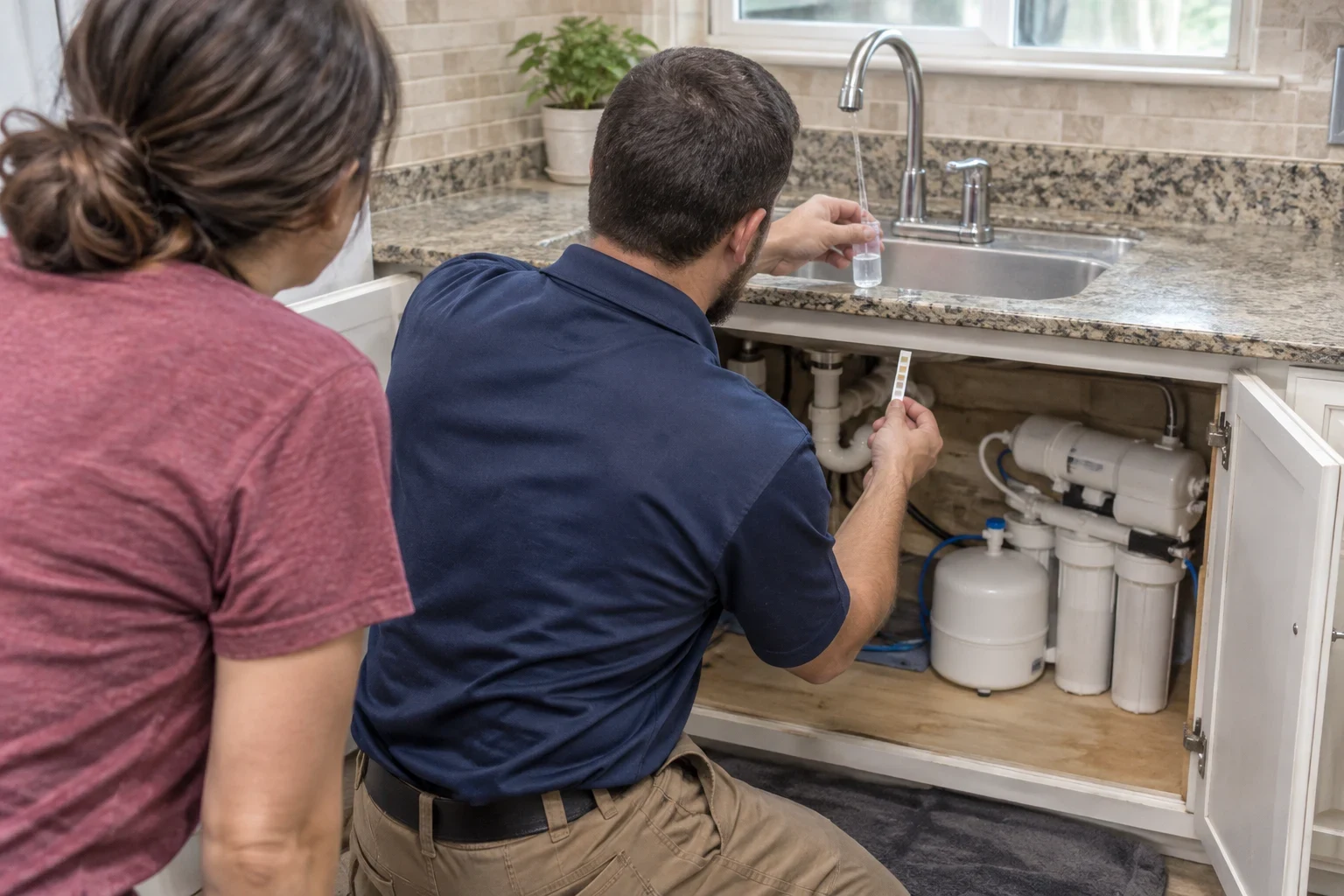
- Hardness and iron test
- We read hardness in grains per gallon and check for iron, because even a little iron can coat and foul the resin. Those two numbers set the size and configuration.
- Capacity sizing
- Your hardness reading multiplied by the gallons your household uses each day tells us how much resin you need. An undersized bed recharges too often and goes through salt quickly. An oversized one sits mostly unused, and water can cut narrow paths through the beads instead of touching all of them.
- Demand-based control valve
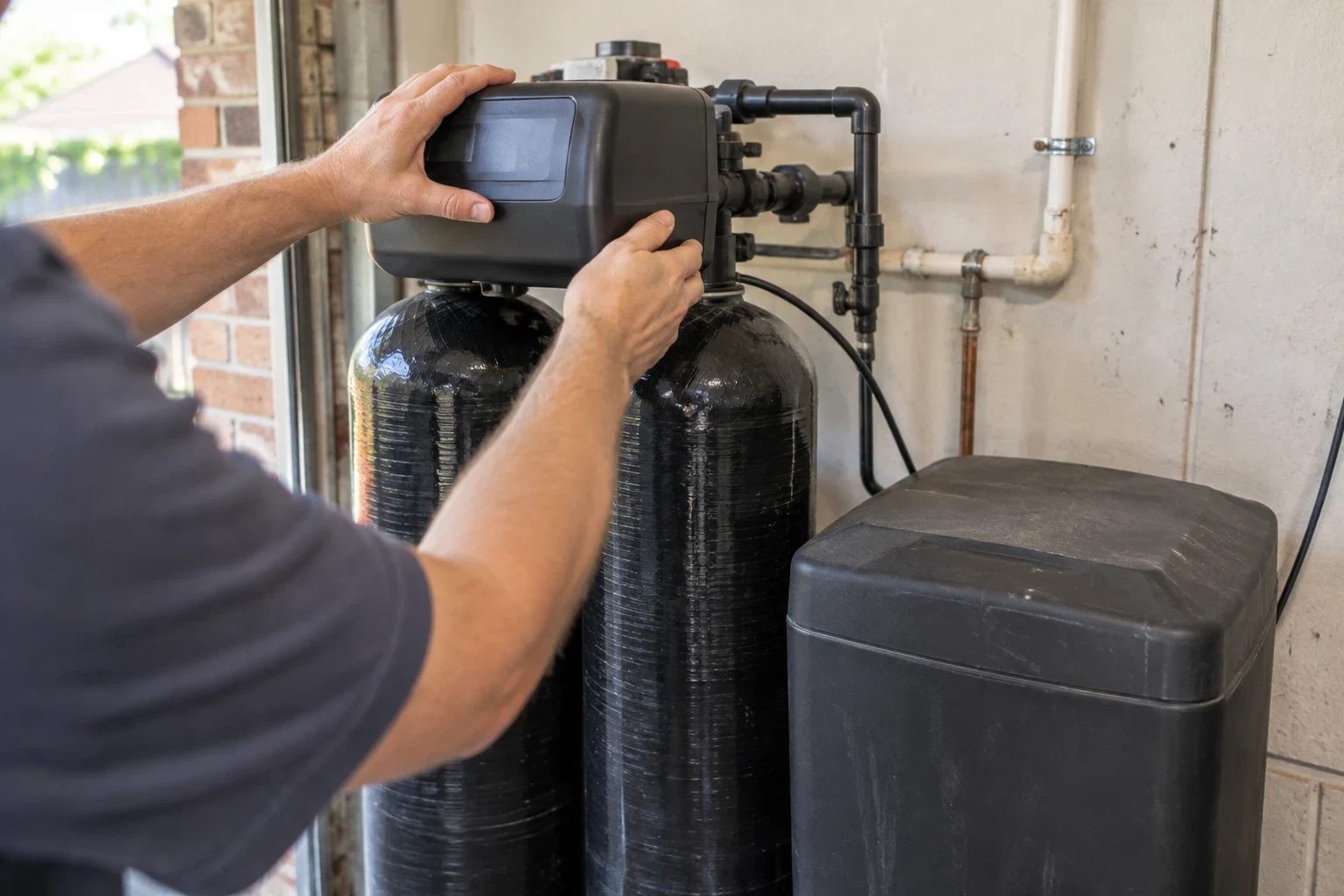
- Our usual pick is a valve that counts gallons and recharges the resin only when its capacity is close to spent, rather than on a set calendar. That generally saves salt and reduces the rinse water sent down the drain.
- Bypass and plumbing
- Each install includes a bypass, so the softener can be taken out of the loop for service while the rest of your home keeps running water. Where a softener loop already exists we connect to it; otherwise we tie into the main line.
- Drain line with air gap
- The regeneration drain goes to an approved discharge point with a proper air gap, so wastewater has no path to siphon back into the system.
- Setup walkthrough
- We program hardness, regeneration time and salt settings, then show you how to check the brine tank and spot salt bridging.
Signs your water may need softening
White crust on fixtures
Chalky buildup on aerators, showerheads and faucet bases is calcium carbonate left behind as water dries.
Spotted dishes and glass
Cloudy spots after the dishwasher, or a haze on shower doors that returns days after cleaning.
Soap that will not lather
Hardness minerals react with soap to form scum, so you use more shampoo and detergent and still feel a residue.
Noise from the water heater
Crackling or knocking sounds while the tank heats usually point to scale settled on the bottom. Water trapped beneath that crust boils in pockets, and the burner or element has to run longer to heat through it.
Stiff, dull laundry
Minerals left in fabric make towels scratchy and colors fade faster.
What moves the price of a softener
The cost depends mostly on how much hardness your water carries and how hard the install location is to reach. Every one of these items is listed on your written quote before work starts. Installation itself is covered by our free installation offer.
Resin capacity
Higher hardness and larger households need more resin, a bigger tank and a matching brine tank.
Valve type
A metered, demand-initiated valve costs more up front than a basic timer but typically uses less salt over its life.
Pre-treatment needs
Chlorinated city water slowly breaks down resin. A carbon pre-filter protects it, and iron in the water may call for a different resin or added treatment.
Plumbing access
An existing softener loop makes the job simple. Running new lines, a longer drain route or working in a tight utility space adds labor.
From first test to soft water
- 1
Measure and listen
We take a hardness reading at a tap, find where the main line enters your home and ask how many people use the water. If the numbers do not justify a softener, you hear that from us.
- 2
Written quote
Before anything is installed, you get the quote on paper. It names the tank size and valve, notes whether a pre-filter is part of the job and spells out the pipe work we will do. The install matches that page, and nothing gets tacked on afterward.
- 3
Install day
We close the main, fit the bypass and connect the resin tank, brine tank and drain line. Water is usually off only while the connections are made, and we clear and wipe down the work area before we leave.
- 4
Startup and check
We load the brine tank, trigger a manual regeneration, confirm soft water at a fixture and leave your settings written down.
Water softener questions
Does every home around La Porte need a softener?
No. Hardness changes from one water source to the next, and many homes carry too little to make a softener worth buying. We measure first and only recommend one when the reading supports it. If your result comes back low, we tell you. Our water testing page covers what else we look for.
How much salt will it use?
That comes down to your hardness, how much water your household runs and which valve you have. A metered valve waits until the resin is nearly exhausted before it regenerates, so it burns less salt than a clock timer. Most people top off the brine tank with a bag or two and glance inside about once a month.
Can I drink softened water?
Yes, though the exchange process leaves some sodium behind, and the harder your raw water, the more sodium ends up in the softened water. If you are limiting sodium, potassium chloride pellets can stand in for salt. Another option is a reverse osmosis unit at the kitchen sink, which strips the sodium out of the water you drink and cook with.
How do I look after a softener once it is installed?
Your main job is keeping salt stocked in the brine tank. Every so often, look for a hard shelf of salt that can form above the water line and break through it if you find one, since it keeps brine from forming. If your setup includes a carbon pre-filter, swap the cartridge on its schedule. We offer full services after the sale, so when the unit needs attention you have someone to call.
Will a softener fix chlorine taste or odor?
No. Resin trades hardness minerals and leaves chlorine untouched. Activated carbon is what removes it, either through whole-home filtration or a point-of-use filter, and we can price both on the same quote.
Get a straight answer on softening
Describe the scale, spots or soap scum you are dealing with and where your water line comes into the house. We will measure your hardness and put the scope and pricing factors on a written quote before any work begins.