ServicesWell Water Treatment
Well Water Treatment in La Porte
We treat private well water for the problems a test actually finds: iron stains, rotten-egg odor, grit and bacteria. You get a written scope and the factors behind the price before we touch your plumbing, so the system you approve is the system we install.
Treatment matched to what is in your well
A private well has no utility treating it upstream. Whatever the groundwater picks up on its way to your pump comes straight into your home. That usually means dissolved iron and manganese, hydrogen sulfide gas, fine sand or silt, and sometimes coliform bacteria after heavy rain pushes surface water toward the casing.
Each of those needs a different fix. Iron and sulfur have to be oxidized before a filter can catch them. Bacteria need disinfection, usually ultraviolet light. Sediment needs mechanical filtration ahead of everything else so it does not foul the other stages. That is why we test first and build the system in the right order instead of selling one tank for every well.
Before installation, you receive a written quote that lists each component, why it is there and what drives its cost. If a stage is not supported by your results, it is not on the quote.
What a well treatment system can include
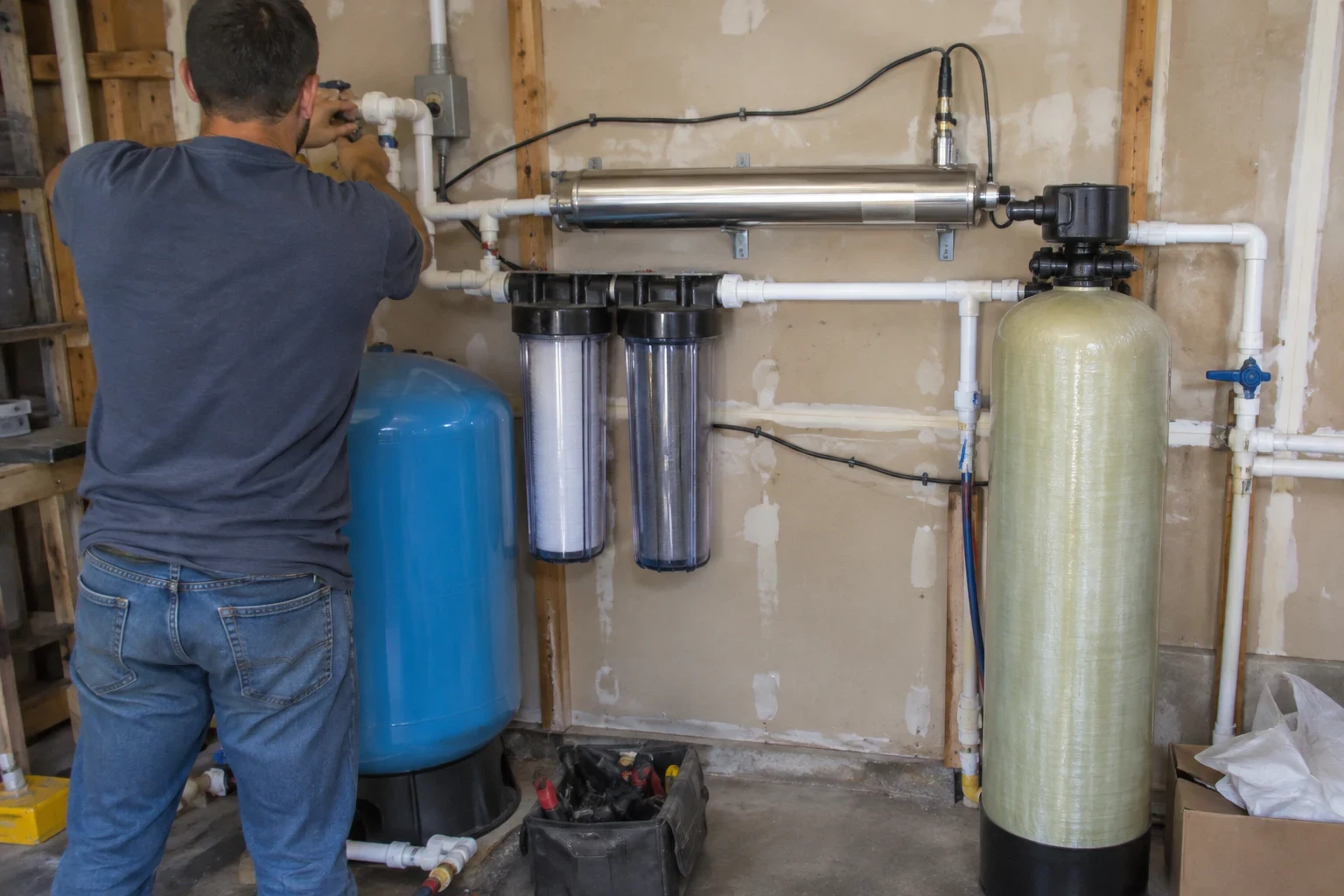
Sediment prefilter
A spin-down screen or cartridge housing catches sand and silt first. It protects the control valves, media and UV sleeve downstream from scoring and clogging.
Iron, manganese and sulfur removal
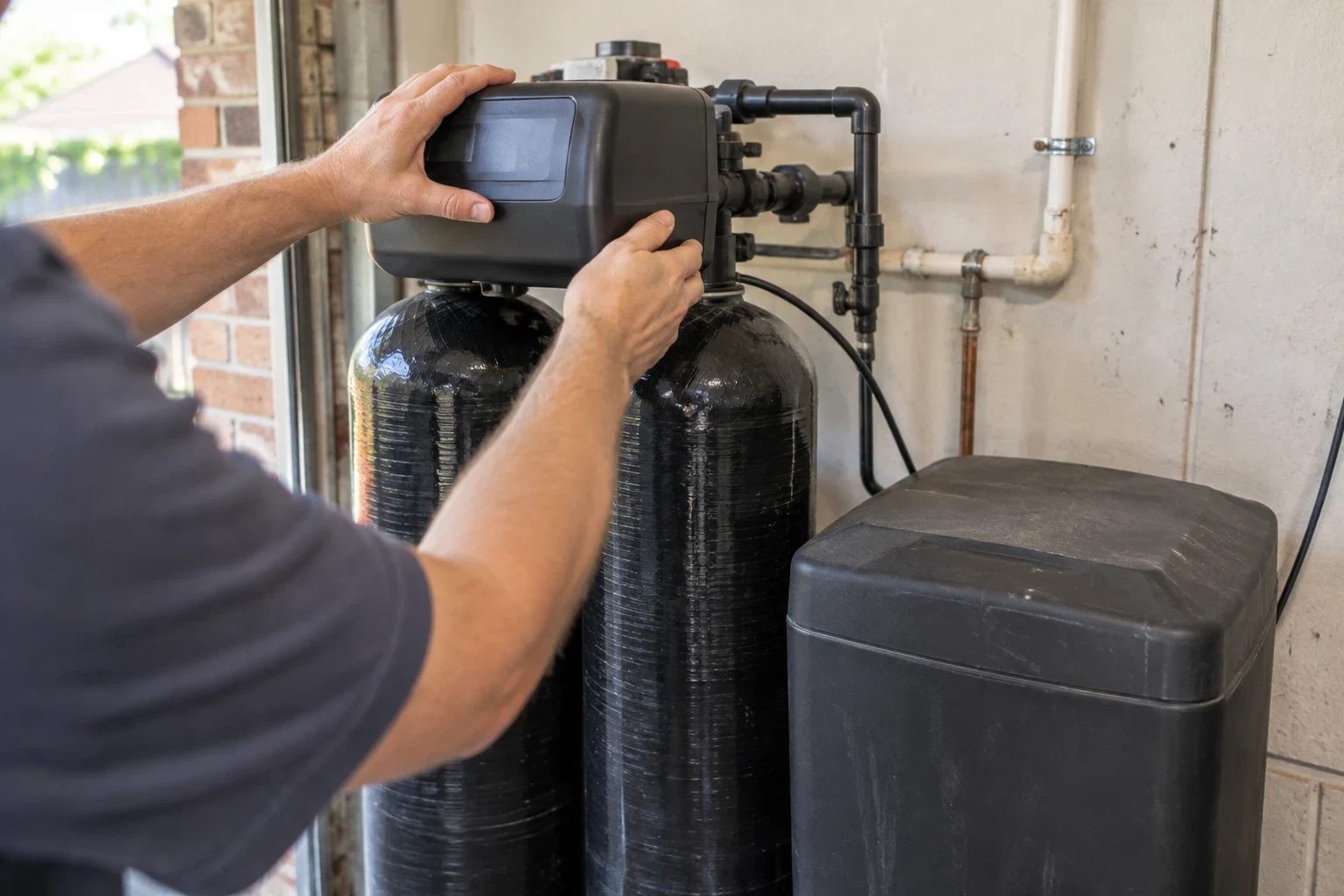
An air-injection oxidizing filter holds a pocket of air at the top of the tank. Water passing through it converts dissolved iron, manganese and hydrogen sulfide into particles the media bed traps, and the unit backwashes them to drain on a timer.
UV disinfection
An ultraviolet chamber with a quartz sleeve inactivates bacteria as water flows past the lamp. We place it after filtration, because cloudy or iron-bearing water shields microbes from the light.
Chlorine injection for heavy loads
When sulfur or iron levels are too high for air injection alone, a metering pump feeds chlorine into a contact tank, followed by catalytic carbon to remove the leftover chlorine taste.
Bypass, drain and electrical work
Every system gets a bypass valve so you keep water during service, a proper backwash drain line with an air gap, and the outlet connections the UV lamp and control heads need.
When your well is telling you something
- Rust rings and dark streaks
- Iron leaves reddish-orange marks in toilet bowls, around tub drains and on white laundry. Black or brown-gray streaking usually comes from manganese.
- A sulfur odor at the tap
- That rotten-egg smell is hydrogen sulfide gas. When it appears on the hot side only, the water heater's anode rod may be reacting with sulfate, and we rule that out before suggesting any equipment.
- Sand in screens and valves
- Grit collecting in faucet aerators, or a toilet fill valve that wears out again and again, usually means the well is drawing sediment.
- Coliform on a lab report
- A positive bacteria result, particularly after a flood or pump work, means the well needs shock chlorination followed by continuous disinfection.
- Metal taste or red slime
- A reddish, slimy film inside the toilet tank can be iron bacteria. They live on dissolved iron and gradually narrow pipes and foul fixtures.
How a well treatment job runs
- 1
Test the water
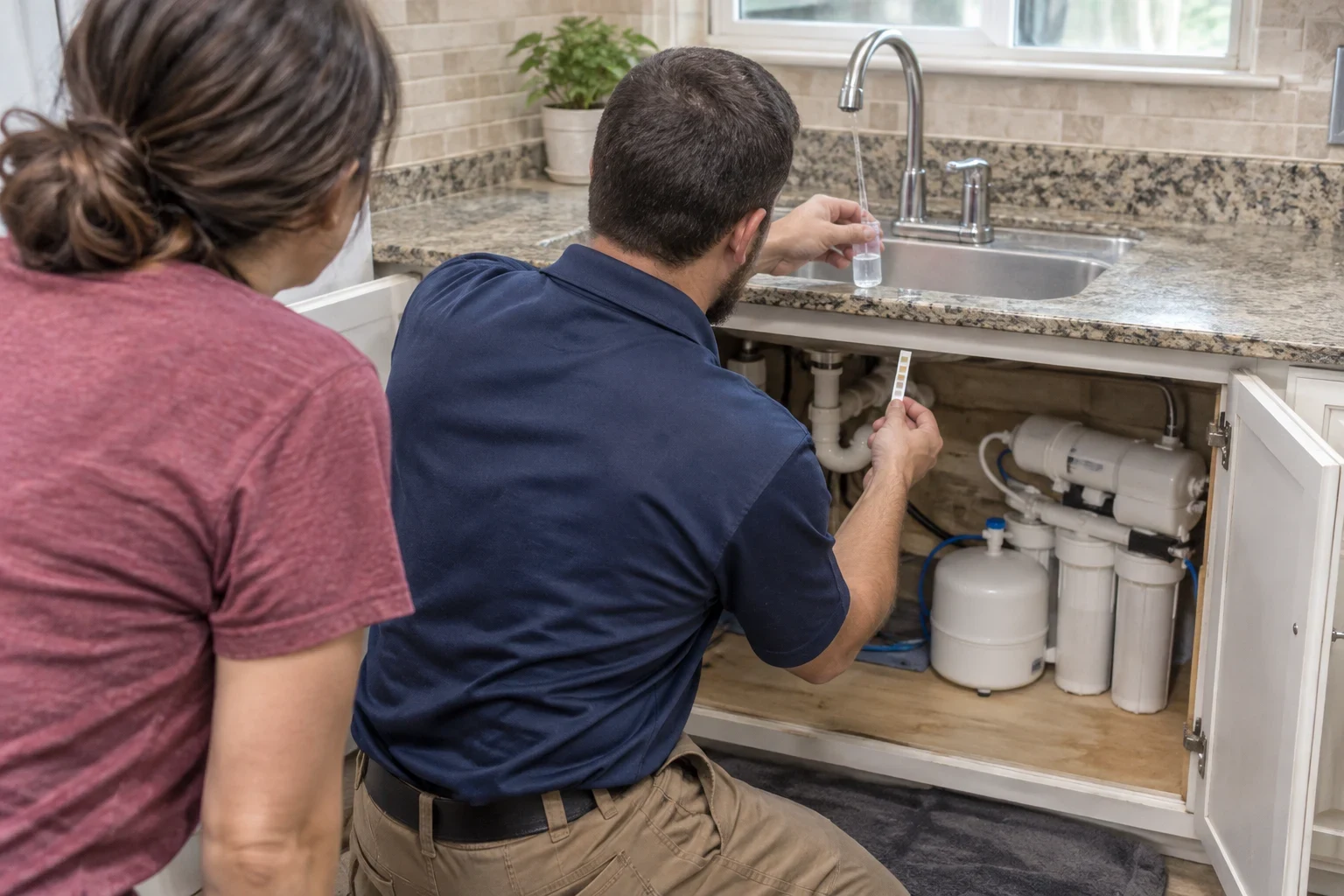
We start with a sample from your well, checked for iron, manganese, hydrogen sulfide, hardness, pH and bacteria. Our Water Testing page explains what each result means.
- 2
Measure the well and your home
We check your pump flow rate and pressure tank settings, since backwashing filters need enough gallons per minute to clean themselves. We also count bathrooms and fixtures to size the system.
- 3
Written quote before work
You get the scope in writing: each component, its purpose and the factors behind the price. Nothing gets added on installation day that was not on that page.
- 4
Installation and startup
We plumb the system in after the pressure tank, run the drain line, set the backwash schedule and flush the lines. Free installation is part of our offer. We then run a follow-up test to confirm the water is clean.
What moves the price of well treatment
The water test sets most of the cost, because it decides how many stages you need. A well with only sediment is a short job. One with high iron, strong sulfur and bacteria needs several components installed in sequence. Every factor below is spelled out on your written quote.
- Contaminant levels
- Moderate iron can be handled by one air-injection filter. High concentrations may require chlorine injection, a contact tank and carbon.
- Flow rate and household size
- Larger homes need bigger tanks and higher-flow valves so pressure holds when two showers run at once.
- Install location and plumbing
- Equipment in a tight well house or a garage far from a drain takes more piping and labor than an open, accessible spot.
- Added stages
- A water softener for hardness or a reverse osmosis unit for drinking water adds to the scope only when your results call for it.
Well water treatment questions
- Do I really need a test before buying a system?
- Yes. Iron, sulfur and bacteria each call for different equipment, and guessing leads to the wrong filter or one far larger than you need. The test also shows whether an extra stage, such as a softener, is worth adding at all.
- Will the equipment cut into my water pressure?
- Not if it is sized correctly. The drop through a well-matched system is slight. Pressure trouble comes from a tank or control valve too small for the gallons per minute your home draws, so we measure pump output and count fixtures before writing the quote.
- Is UV light enough to make my well safe?
- UV works well against bacteria once the water is clear. If iron or sediment is present, those must be removed first or they shade microbes from the lamp. After a contamination event, we shock chlorinate the well before relying on UV.
- What maintenance does the system need?
- UV lamps are typically replaced once a year, and the quartz sleeve should be cleaned when the lamp is changed. Sediment cartridges are swapped as they load up, and filter media is replaced every few years. We offer full services after the sale, so we handle that upkeep.
- My water smells only when the hot tap runs. Is that a well problem?
- Often it is the water heater. A magnesium anode rod can react with sulfate in well water and produce hydrogen sulfide inside the tank. Swapping the anode may solve it without filtration, and we will tell you if that is the case.
Get a clear plan for your well
Describe the stains, odor or grit you have noticed, and we will walk you through the test and the treatments that usually solve it. The full scope comes to you in writing before anything goes on the schedule.