ServicesReverse Osmosis
Reverse Osmosis Systems in La Porte
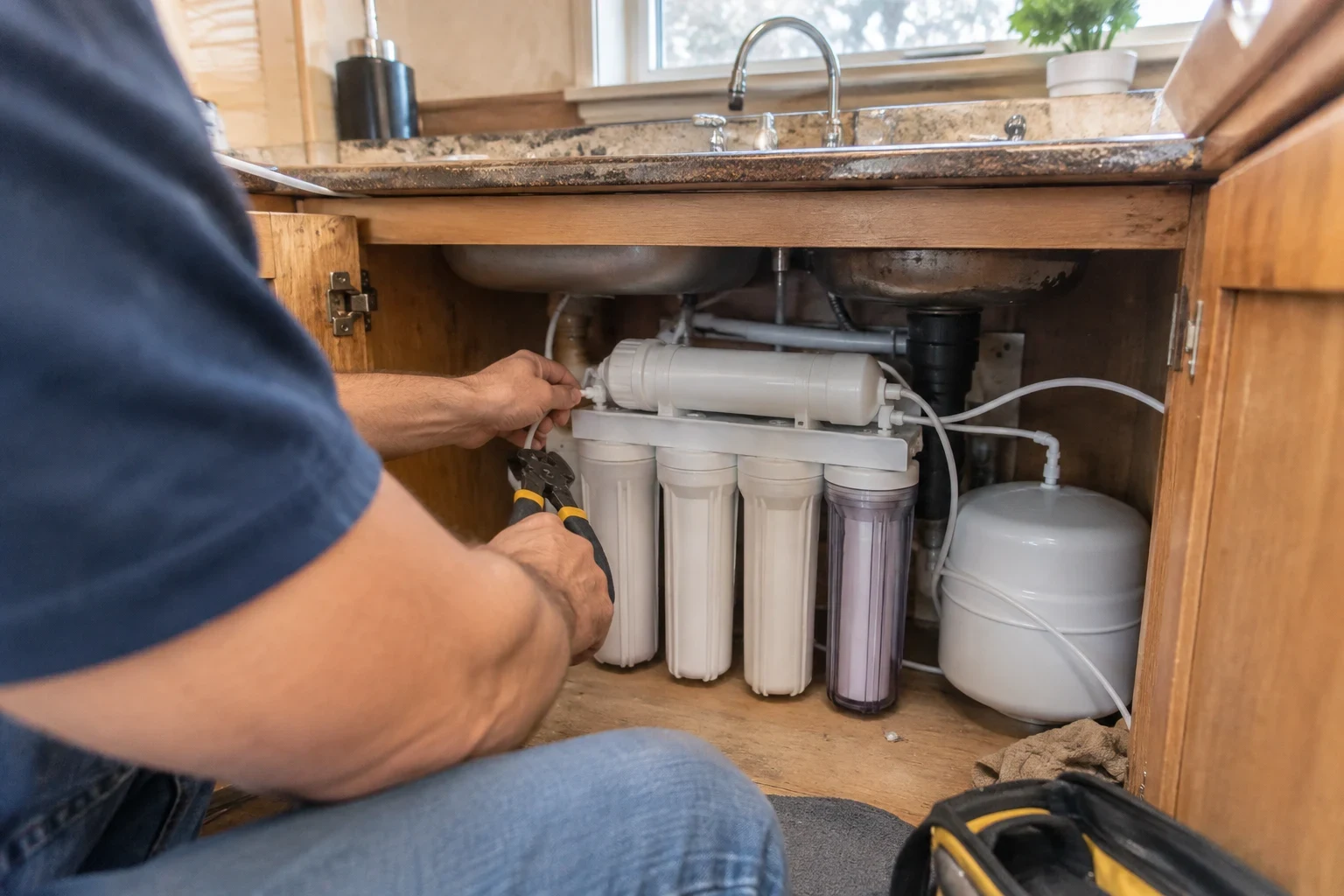
We install under-sink reverse osmosis systems that send your drinking and cooking water through sediment and carbon stages, a semipermeable membrane and a final polishing filter. Before any work starts, you get the parts list, the scope and what sets the price in writing.
What reverse osmosis does at your kitchen sink
Reverse osmosis uses your household water pressure to push water through a thin-film composite membrane with openings far smaller than most dissolved solids. Water molecules get through. Most dissolved minerals, salts, and many metals and trace contaminants do not, and the system flushes them to the drain. What reaches the dedicated faucet is low-TDS water, held in a small pressurized tank under the sink.
Because it is a point-of-use system, it treats drinking and cooking water only, not every tap in your home. That suits concerns like taste, older plumbing that might release metals, or wanting protection beyond what the utility already provides. When the complaint is chlorine odor in the shower or scale building on fixtures, whole-home filtration or a water softener handles it better, and we will point you there instead.
Before any work begins, you get the scope in writing: the stages, the faucet, where the drain line connects, and whether an add-on such as a booster pump is needed. The bill only carries parts that were on that page.
Parts and work in an RO installation
Sediment prefilter
A spun polypropylene cartridge traps sand, pipe scale and silt. Stopping that grit early keeps the carbon stage from plugging and protects the membrane surface.
Carbon prefilter
Thin-film membranes degrade when exposed to chlorine or chloramine. A carbon block placed ahead of the membrane strips those out, which extends membrane life and improves taste.
Membrane and storage tank
Because the membrane makes water slowly, a bladder tank holds a supply under pressure until you open the faucet. We adjust the tank's air precharge so the faucet flows steadily.
Post filter and dedicated faucet
A last carbon stage cleans up taste as water leaves the tank. The separate faucet goes on the sink deck through a spare sprayer or soap hole, or we drill the countertop if no hole is free.
Drain saddle and feed connection
The reject line clamps to the sink drain above the trap with a drain saddle, so wastewater exits without siphoning back. Feed water comes off the cold-water angle stop through an adapter.
Refrigerator or ice maker hookup
We can tee RO water to your fridge's water dispenser or ice maker on request. The tubing route and fittings are spelled out on the quote before we run them.
Signs reverse osmosis fits your kitchen
- You keep buying bottled water
- A dedicated RO faucet delivers similar water straight from the tap. No more hauling flats home from the store or filling the recycling bin with empty bottles.
- Your home has older supply lines
- Old pipes and solder joints can release lead or copper into the water you drink. A membrane is among the stronger point-of-use barriers for dissolved metals, and a test tells you whether that applies to your home.
- Hot drinks and ice taste wrong
- Dissolved solids and disinfection byproducts show up most in coffee, tea and ice. Lower-TDS water usually tastes cleaner and brews more consistently.
- Test results showed high TDS or contaminants
- If water testing found elevated dissolved solids, nitrates or metals, RO strips them out at the faucet you actually drink from.
- A pitcher or faucet filter falls short
- Those filters work mostly with carbon. Taste improves, but the bulk of dissolved solids passes right through them.
How an install day runs
- 1
Phone call and written scope
We ask about your sink, cabinet space, water source and any test results. You get a written scope listing each stage, the faucet, tubing runs and any add-ons before we schedule.
- 2
Check pressure and space
On arrival we measure incoming pressure and look at the cabinet layout. Membranes need steady pressure to produce well, so if yours runs low we explain whether a pump is worth it.
- 3
Install and connect
We mount the filter housings and tank, tie into the cold line and drain, set the faucet, and run any fridge line. We protect the cabinet floor and leave it clean.
- 4
Flush, measure and walk through
New carbon and membranes need flushing before use. We drain the first tank, check TDS before and after the membrane so you see the reduction, and show you how and when to change each cartridge.
What drives the cost of a reverse osmosis install
Two things set your total: the hardware you choose and the work your kitchen needs to accept it. We write out each part and each task before we start, and nothing gets added later. Free installation is one of our standing offers, and we provide full services after the sale.
- Number of stages
- The basic build runs four stages: sediment, carbon, membrane and a post filter. A remineralization stage or an ultraviolet lamp adds hardware cost, so we recommend those only when test results or your own preference call for them.
- Water pressure at the house
- Low pressure makes a membrane produce slowly and send more water to the drain. When our gauge reads low, a booster pump can make sense, and it appears as a separate quote line only then.
- How the faucet goes in
- A spare sprayer or soap dispenser hole lets us mount the faucet quickly. Granite and quartz tops need a diamond core bit and extra time to cut a clean hole without chipping.
- Running a line to the fridge
- Sending RO water to a refrigerator or ice maker takes added tubing, a tee and labor to route it through cabinets or under the floor. The farther the fridge sits from the sink, the more of each the job needs.
Reverse osmosis questions
- How much water does an RO system send down the drain?
- Every RO unit rinses rejected solids to the drain while it makes water. The amount depends on membrane design, line pressure and water temperature. Stronger pressure means less wasted water per gallon made, which is why we measure pressure before recommending a pump.
- How often do the filters need changing?
- Expect to replace the sediment and carbon cartridges about once a year, sooner if your water carries a lot of grit. Keeping those prefilters fresh lets the membrane last several times longer. We cover the schedule at install, and a TDS reading at the faucet tells you when the membrane begins passing more solids.
- Does RO remove minerals I want to keep?
- Yes. The membrane takes out most dissolved minerals along with the contaminants. Most of the minerals people need come from food, but if you prefer the taste of mineralized water, a remineralization cartridge or one of our alkaline water systems adds some back.
- Is there room for RO if a garbage disposal is already under the sink?
- Usually there is. The system needs space for three or four filter housings and a storage tank about the size of a basketball. If the cabinet is tight, we can set the tank off to the side or in the neighboring cabinet, and we note that placement on your quote.
- Should I test my water first?
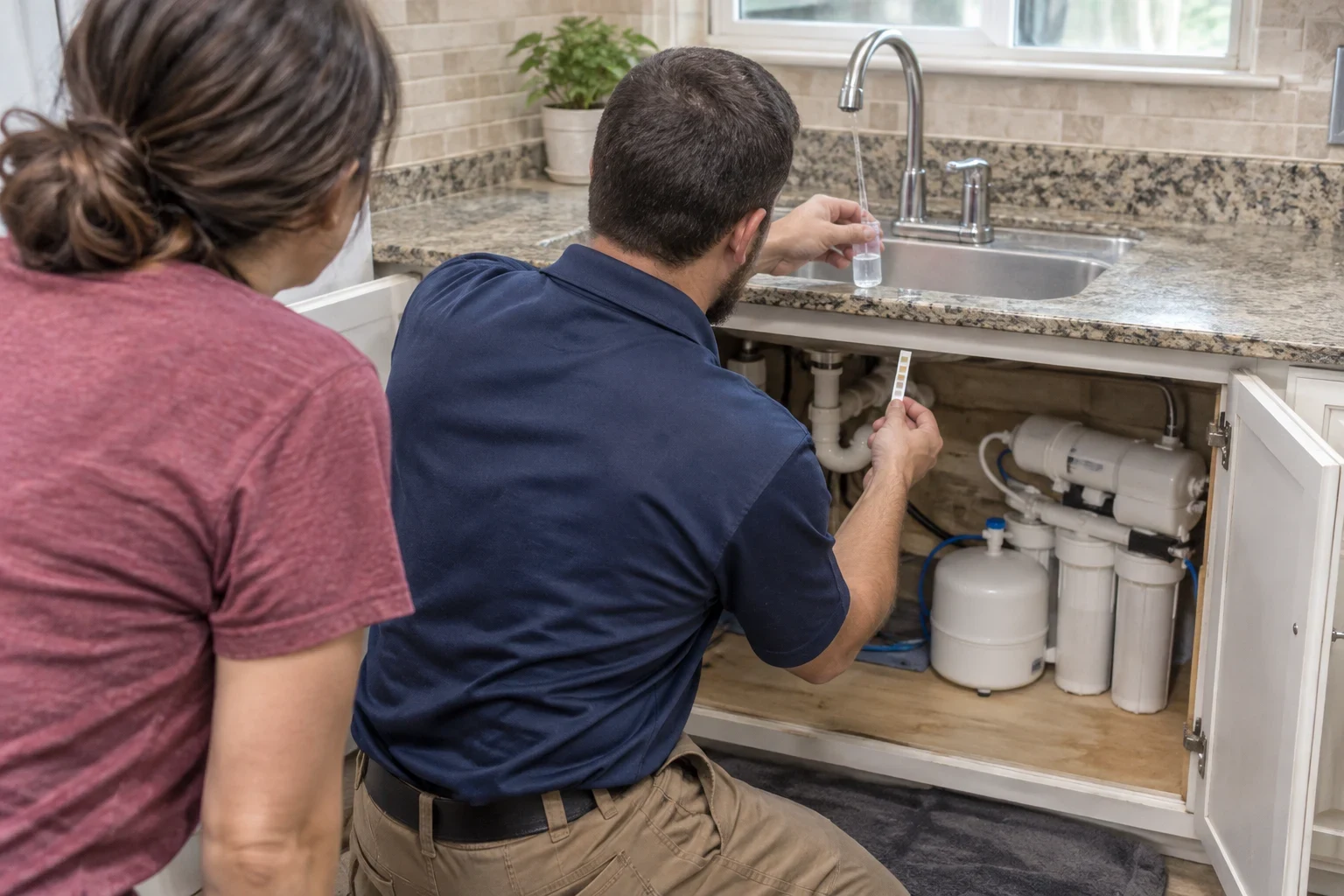
- We recommend it if your home has older plumbing, you use a private well or you have a particular concern. Our water testing service shows what is really in your water, so the system matches actual results rather than guesses.
Get the scope and parts list before anything is installed
Tell us about your sink, your water and what bothers you about it. We will lay out the stages, the add-ons and what drives the price in writing so you can decide with the details in front of you.