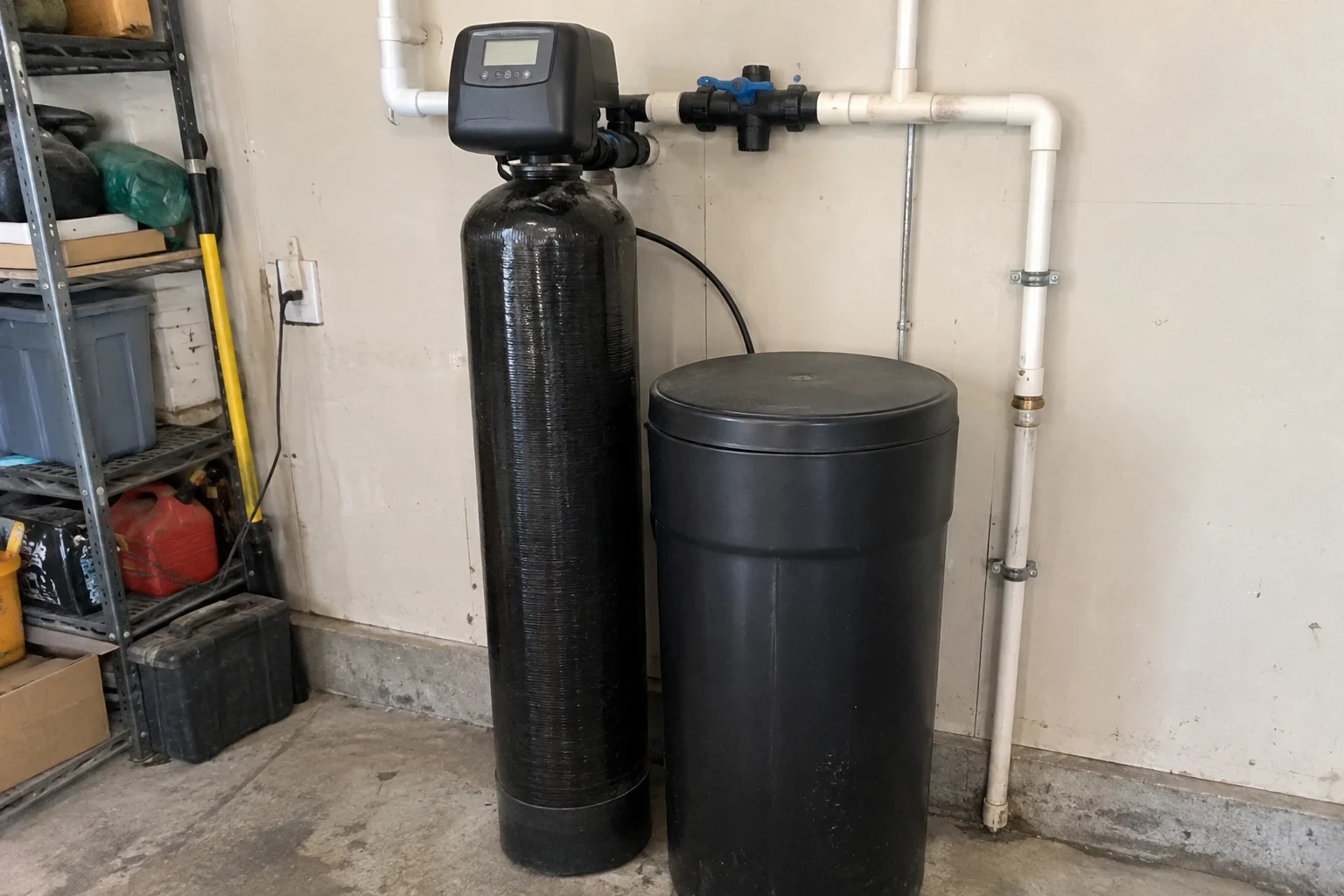
Is it better to oversize a water softener for a La Porte home?
A softener that is a little larger than your daily need can save salt, but one that is far too large can soften poorly and cost more to buy.
Is it better to oversize a water softener?
No, a heavily oversized softener is not better. One modest step up from your calculated need is often smart because it lets the system regenerate with less salt. Go much bigger and low water flow can channel through the resin, and long idle stretches can foul it. Size the softener to a hardness test and your household's use. (281) 717-6987
How a water softener is sized
A softener's capacity is measured in grains of hardness it can remove before the resin needs to regenerate. The resin is a bed of small plastic beads charged with sodium. As hard water passes through, calcium and magnesium trade places with that sodium until the beads are spent and the control valve runs a brine cycle to recharge them.
Sizing starts with three numbers: your water's hardness in grains per gallon, how many gallons your home uses in a day, and how many days you want between regenerations. Multiply hardness by daily gallons and you get the grains the softener must remove each day. Multiply that by the regeneration interval and you have the working capacity you need.
A common planning figure is roughly 75 gallons per person per day, but your real use can be higher or lower. A family with teenagers, a large soaking tub or an irrigation line tied in before the softener will use more. That is why we ask about the household before we pick a tank.
- Hardness from a test of your water, in grains per gallon
- Iron, if any, which adds to the load the resin carries
- Daily water use based on people and fixtures
- A target interval of about a week between regenerations
- Peak flow rate, so the tank does not restrict pressure
Why a slightly larger softener can make sense
Capacity is not fixed. The same tank can be set to use a heavy salt dose and squeeze out its full rated capacity, or a lighter dose and deliver less capacity per cycle with much better salt efficiency. A tank one size up lets us program the lighter dose and still reach your weekly target, so you buy fewer bags of salt over the life of the system.
A bit of extra resin also covers the days your home uses more water than usual, like holiday guests or a week of laundry catch-up, without hard water slipping through before the valve regenerates.
What goes wrong when a softener is far too big
Resin works best when water moves through the bed at a reasonable speed. In a tank that is much too wide for your flow, water at a single faucet trickles through slowly and tends to cut channels down the easiest path. Parts of the bed get skipped, so some hard water reaches your fixtures even though the resin is not used up.
Backwash is the other problem. During regeneration the valve reverses flow to lift and loosen the resin and flush out sediment. A larger tank needs a higher backwash flow rate to do that. If your service line or well pump cannot supply it, the bed stays packed and dirty, and the softener loses capacity over time.
Long gaps between regenerations cause trouble too. A softener sized to run once a month leaves water and resin sitting for weeks. Iron and organic matter can coat the beads, and stagnant brine and water are not what you want feeding your home. Many valves can be set to force a cycle every week or two, but then you are paying salt for capacity you never use.
- Channeling at low flow lets hardness through early
- Backwash too weak to clean a large resin bed
- Idle resin that fouls between cycles
- Higher purchase price for resin and tank you do not need
- A bigger footprint in a garage or utility closet
Why the hardness test comes before the tank size
Water hardness across the La Porte area depends on the source feeding your street or your well, and it can change over the years. Guessing the number is how people end up with a softener that is either undersized or several sizes too large. A test of your own tap water gives the grains per gallon and shows whether iron or other minerals need attention first, which might point toward well water treatment or whole-home filtration instead of, or alongside, a softener.
Once we have the numbers, we write out the sizing math in your quote: the hardness figure, the daily use we assumed, the regeneration interval and the salt setting. You can see exactly why we chose that tank, and you will not find a larger unit or an extra component added on install day. Our offers include free installation and full services after the sale, so the system can be checked and the settings adjusted if your household changes.
More questions about softener sizing
- Is an undersized softener worse than an oversized one?
- Both cause problems. An undersized unit regenerates too often, wastes salt and water, and can run out of capacity mid-day, while a badly oversized one channels and fouls. A modest step up from your calculated need is usually the safer side to land on.
- Can I fix an oversized softener without replacing it?
- Sometimes. Lowering the salt dose, setting a forced regeneration every week or so, and checking that backwash flow matches the tank can help. If channeling continues, a smaller tank may be the real fix.
- Does a metered valve change how big the softener should be?
- A demand-initiated valve regenerates based on actual gallons used, which keeps a properly sized tank efficient. It does not cure a tank that is far too large for your flow, because the channeling and backwash issues remain.
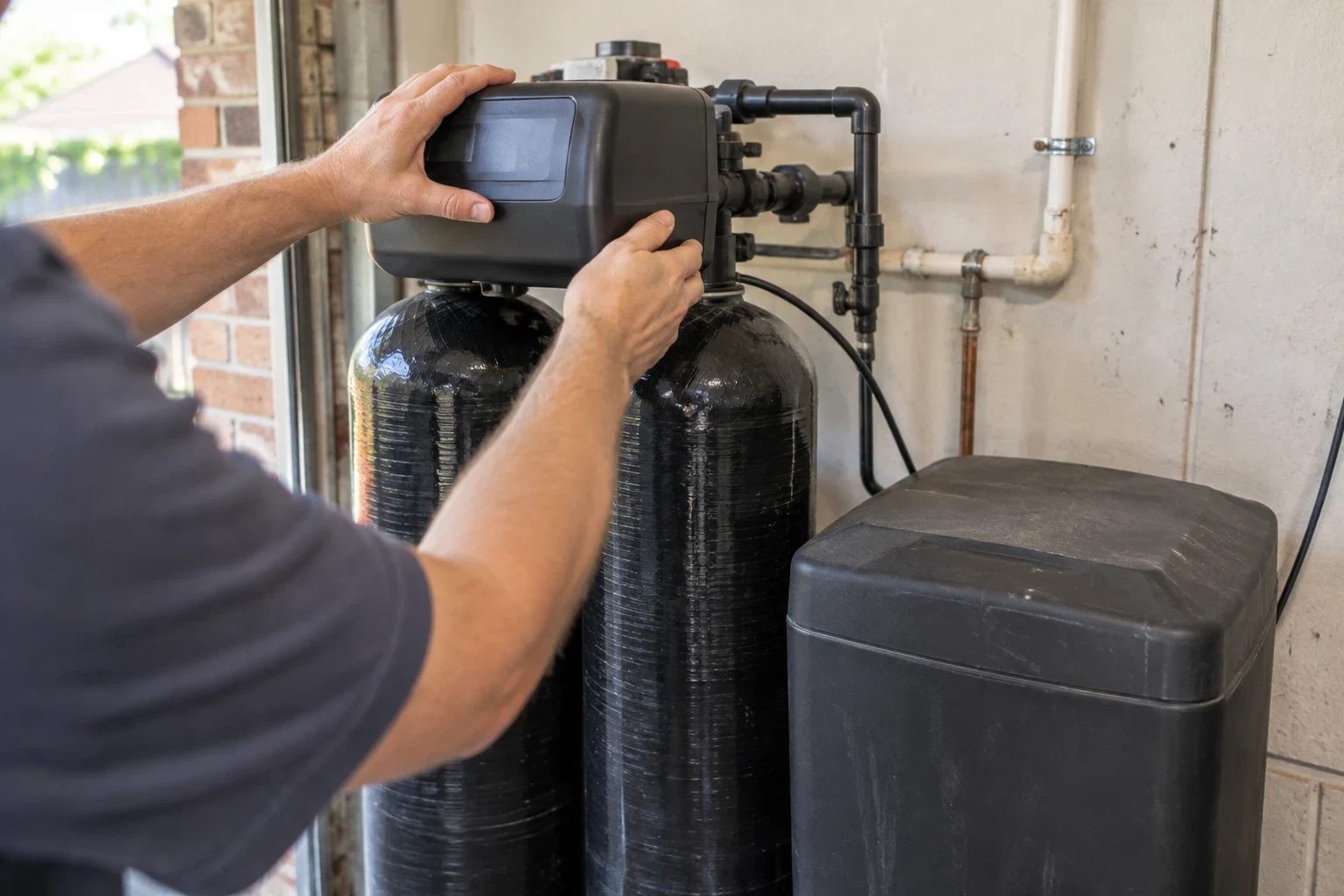
Get the sizing math in writing
Give us a call and we will talk through your water, your household and your plumbing, then put the softener size, salt setting and every line of the cost in a written quote before any work starts.